QuiltCon 2013


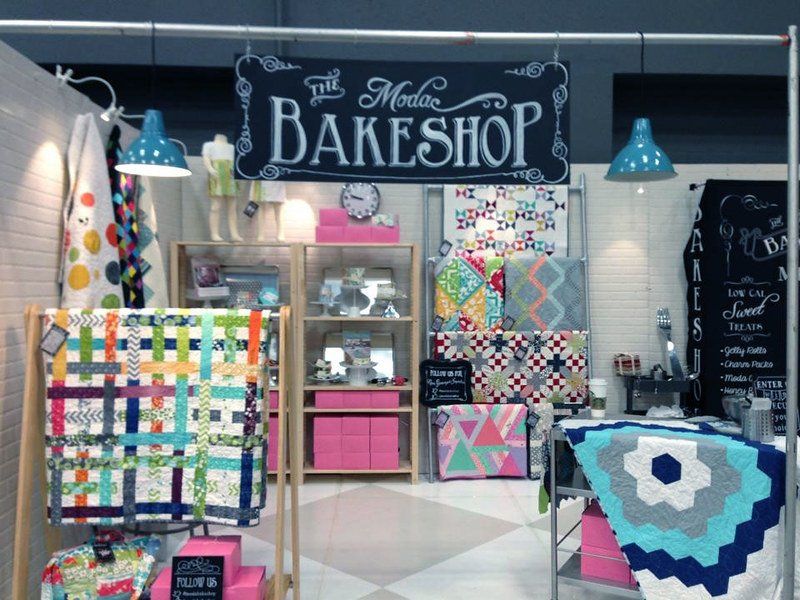
QuiltCon, the inaugural modern quilting show, took place in Austin this past weekend. Moda Fabrics and the Moda Bake Shop had a booth, and it was wonderful to meet so many Bake Shop readers in person. If you took photos in our photo booth, we’d love to see them! Add them to our Flickr group.

If you are looking for a pattern for one of the quilts on display in the booth, here is the full list with links:

Pippa Armbrester | Pixelated Patchwork 

 Cindy Sharp | Nough Said Layer Cake Quilt

 Natalia Bonner | Skittles Quilt 

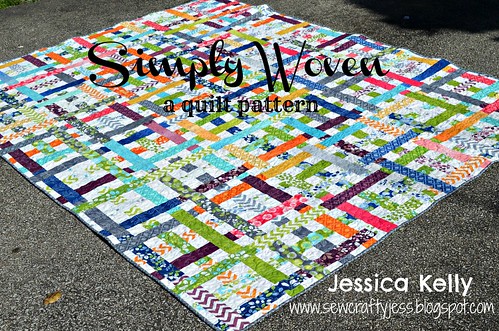
 Jessica Kelly | Simply Woven Quilt 

 Elizabeth Dackson | Modern Halves

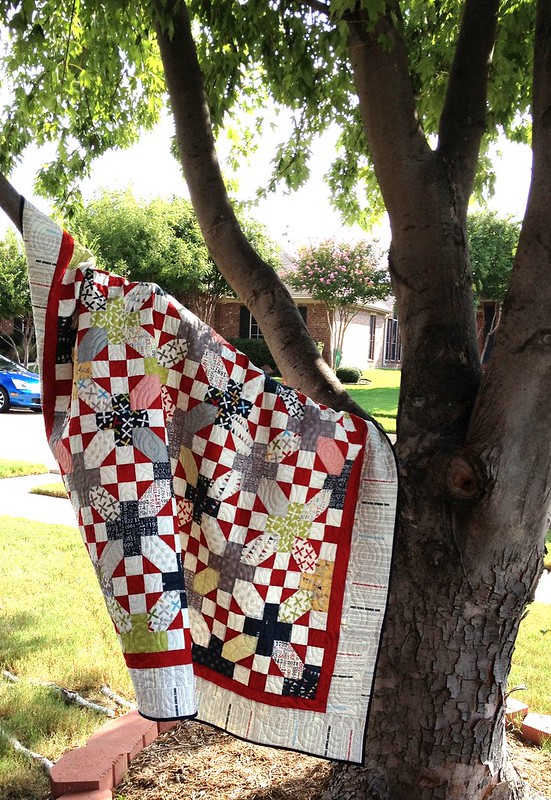
 Erica Jackman | Cozy Posy Triangle Quilt 

 Tammie Schaffer | Charm Crossing Quilt 

 Amanda Castor | Pezzy Lattice Quilt 

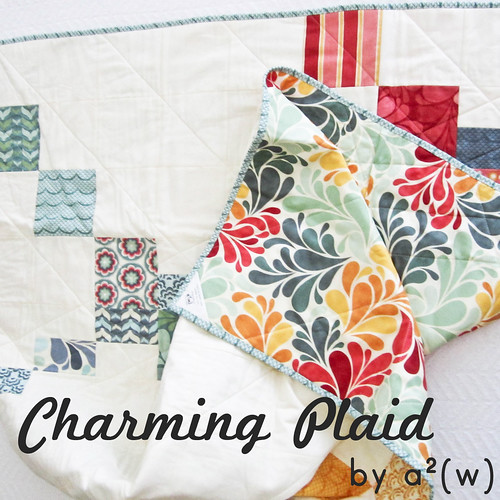
 Ali Winston | Charming Plaid Quilt 

Lissa Alexander | Honeycomb Quilt

Granny Square Quilt


Hi there!  I’m Jolene from Blue Elephant Stitches.  I’ve always loved the look of crocheted granny square throws.  Since I don’t know how to crochet, I came up with a quilt block that would give a similar look.  I wrote that tutorial on my blog about a year ago, using scrappy squares.

Here is a revised version using a jelly roll which makes it go so fast!  I tried to write this tutorial in a way that made the best use of strips, yet still gave a scrappy look, since you don’t want all your blocks to look the same.  When you use this method, you will have two blocks of each color set.

Quilt dimensions: 52″ x 62″


1 jelly roll ( I used Posy by Aneela Hoey) you will only use half the strips
Main Background fabric – 2.5 yards
Border (optional) – 1.5 yards
Binding – 0.5 yard
Backing – a piece of fabric measuring at least 56″ x 66″
Batting – a piece measuring at least 56″ x 66″


1.  From your Main Background color cut:

     16 strips – 3″ x width of fabric (these strips will be for your blocks)
     13 strips – 2.5″ x width of fabric(these strips will be sashing)
2.  Choose twenty strips from your jelly roll that you want to use in this quilt.  (the remaining strips can be    
     used for binding, or saved for another project) Separate into two piles of ten.  One stack will be for your                  
     inner granny rings, and the other set will be for your outer granny rings.
3.  Now we will subcut our strips as follows:
   
       Inner Granny Rings – cut all 10 like the diagram below:


      Outer Granny Rings – cut all 10 like the diagram below:

       Background – cut 10 of your 3″wide strips like the diagram below:

       Background – cut 3 of your 3″ wide strips like the diagram below:

   
       Background – cut your remaining 3 strips into 3″ squares.  (you will need 40 of these squares)

       YAY!! the cutting for your blocks is done!  Your stacks should look a bit like mine above.  Now let’s    get ready to assemble them.

4.  We are going to assemble these blocks in sets.  Each set will make two blocks, so we will make 10 sets       of blocks, for a total of 20 blocks.  It works best to first sort the sets into piles so that we don’t get mixed up and sew the wrong strips together.

      We’ll start with our Inner Granny Rings.

Take two 5 1/2″ strips from the same fabric, and their two matching 10 1/2″ strips.  Put them together in a pile.  Do this for each of the 10 sets.  You should now have ten 5 1/2″ strips left.  These will be for those little center squares.  Put one on each pile, making sure they are a different fabric..

Now we’ll add the outer ring fabrics to these piles:

For each set, there will be two 5 1/2″ strips and two 10 1/2″ strips of the same fabric.  Place one set together with each pile, keeping in mind the values and colors, since you want these fabrics to have contrast to each other.

Now we just need to add our background fabric:

To each set add two 5 1/2″ strips, four 10 1/2″ strips, and four 3″ squares.

Now we’re ready to sew them together!

5.  Take your sets to your sewing machine and sew the strips together as shown below.  (do one pile or block set at a time)

Press these seams open.

Now cut your sets into strips that are 2 1/2″ wide.  I gave you an extra half an inch when we cut out our strips, so you may have a little bit to trim off.

Arrange your strips as shown above and sew together.  You will have enough for two blocks from each set.

Press these seams to the outside, as I’ve shown above.

Now you can trim your block.  I trimmed mine to 9″ square, but yours might be slightly different.  The most important thing is that your blocks are all square, and all the same size.

Sew your nine remaining block sets together, and you should end up with 20 blocks!  Now we can just add the sashing and the optional border!

To make a border like mine, cut your strips 6″ wide.

To make rounded corners like I did, quilt your quilt as usual, then choose your desired round shape, trace it onto each corner and cut it off.  Use a bias binding to finish your quilt.  Binding made on the bias will make it possible to sew around the curved corners.
                   

52″ x 62″ finished quilt!  I hope you find this tutorial useful!  I’d love to see your finished quilts.

 Jolene Klassen
{blueelephantstitches.blogspot.com}

Peacock Love Mini Quilt


I am so happy and excited to be able to share my latest project here on the Moda Bake Shop!  My name is Pamela Lincoln and I blog over at Mama Spark’s World. The inspiration for this quilt is my daughter.  She raises peafowl on her farm and I thought this might be a nice surprise for her in her new home.  I hope you enjoy making this as much as I did.  If you do make one please share it on my Flickr page, I would love to see your birds!

Let’s get started, shall we?

1 Charm Pack of Kissing Booth by Basic Grey 30310PP
1 Fat Quarter of Kissing Booth Candy Pink 30150 169
2 1/2 yards of Kissing Booth Creme Brulee 30150 166
1/2 yard of Kissing Booth Candy Pink 30310 11

1 1/2 yards Lite Steam-a-seam 2 18″ size 5418

1 1/2 yards batting (your choice)
1 Skein DMC 310 black embroidery floss  17 3371

The first thing you will need to do is print out the templates.  They are located at the end of the Printer Friendly Version at the bottom of this post.  I have drawn them in reverse so if you are using fusible they are all ready for you to use!  Tape the peacock together overlapping where indicated to make the complete bird.

You will need to trace one bird, one wing, one of the large hearts and at least 30 of the small hearts onto your fusible.  I used my light box but a window will work too.  Make sure you are on the correct side if you are using the Lite SAS2 (ask me how I know this!)  I drew one of the small hearts on to paper, cut it out and then traced it onto the cardboard that came with the charm pack.  I cut this cardboard heart out and drew around it onto the fusible so my hearts were more consistent.

You will need to roughly cut out around the shapes, don’t cut them out on the line!

Now comes the fun part!  Choose one of your charm squares for your wing, and approximately 15 other charms for your “feathers” (the small hearts).  Time to fuse the hearts and the wing to your chosen charm squares.  Place the right side of your fabric down on your ironing surface and place 2 hearts on the wrong side of the fabric.  Following manufacturer’s directions fuse the hearts to the charm square.  Do the same with the wing.

Using the plainer pink fabric that you have a FQ of you will repeat this process for the peacock’s body and the large heart.  Rough cut out the peacock, and fuse the body onto the wrong side of the pink fabric.  Repeat process for the large heart. 

Once all this fusing is completed you need to cut out all the hearts, the wing and the peacock on the line.  This will give you the components you need to make the wall hanging.

For the background you are using the Creme Brulee fabric.  Cut off 1 yard from the 2 1/2 yards you began with.  I left the selvedges on at this point and worked with the fabric horizontally, i.e. selvedges were on left and right rather than top an bottom.  I don’t know about you but I don’t have a large space to lay things out on yet.  My “design wall” is another wall hanging in my quilt room, or at least it is for now.  So the largest place I had to lay out the peacock and his tail was my bed!  Pay no attention to the two quilt inspectors!

This was NOT an exact science.  Remove the paper backing on your pieces before you begin and grab some pins.  Lay out the bird and his tail moving things around until you are happy with the placement.  I put my bird quite far to the left and approximately centered between the top and bottom of the background.  I then laid out the hearts until I was happy with the way they looked. Be sure to leave ~ 2 inches so you can remove selvedges and have room to move things if you are not happy.  At this point I put one pin through each of the hearts and a couple to hold the bird and his wing in place.  I did not put the large heart on yet, in case I wanted to be able to do some more trimming!

Now carefully pick up your masterpiece and move it to your design wall, or the floor or somewhere you can get some distance for additional viewing.  Here is where my “design wall came in handy.  See the blue lines and flip flops showing through from the quilt this is pinned to?  I was pretty happy with the placement so it was time to fuse it all to the background.  I carried the bird to my ironing board and following the manufacturer’s directions carefully fused (removing the pins a few at a time before I did the fusing). 

It is now time to trim the selvedges off.  I folded the top and trimmed the selvedges and also a little off the top so that my finished size was 32″ x 42″.

I folded the top in half to determine where to place my large heart, removed the paper and fused it in place also.

I like to secure all my fusible.  You can do this using a ziz zag, blanket stitch or a straight stitch. I opted for a straight stitch and black thread to define everything.

I have a few tips about doing the stitching around if you are using the straight stitch.  I used my open toe, zig zag foot and moved my needle over such that I could use the inside edge of the foot as a stitching guide.

I did one stitch back and then kept stitching, about half way around.  Then I went under the top and gently tugged on the loose thread to bring up a loop on the back.

I pulled the top thread to the back.

Knot off the thread and trim the thread tails.  Return to the sewing down your applique on the top.  This does require a needle down position on your machine as you want to keep your place on the top.

Do the same with the threads when you finish your applique.  This is what it will look like on the back.

Now using a marking tool, I use a pencil, and my light box, position the pattern under your piece and draw on the legs, the head feathers and the eye.

At this point you may either use your sewing machine to make the straight lines and the eye or you can embroider them.  I chose to embroider them using 3 strands of black embroidery floss, a number 11 needle and a small hoop.  I outlined the legs and head feathers using a back stitch.  I did the circles on the head feathers with a French Knot.  For the eye I did a back stitch around the outside of the eye and filled it in with a satin stitch.

DMC has an excellent embroidery stitch guide that can be found here, in case you need more direction than I am giving.

Briefly, this is what I did: 
For the back stitch:  Come up at A, then take a small stitch (between 1/8 and 1/4″ish) and put your needle down at point B to make one stitch.  Then push your needle from behind and come up at C.

Then you will put the needle back down into the B hole.  You continue this stitching to form a line.
I don’t usually travel my thread a great distance as I don’t want it to show through.  As you can see from where I began stitching I would be able to stitch up to where the other toes join the leg and down one more side but then would have to either knot and restart or travel.  I don’t do either of those.  Instead, on the back of the piece, I weave the thread up the line I just stitched to the point I want to go to to continue stitching.  In this case I was able to continue to stitch the toe on the other side of the leg, and then on the back, wove my thread up to the leg, in the center, between the two toes I just stitched.  I then stitched down the center toe and threaded the floss up to it’s starting point and continued to stitch the rest of the leg.  I finished the leg with a small knot and threaded the floss down a few stitches on the back and clipped the floss off.

I outlined the eye using a back stitch as well.  I seem to do better with a thread guide to use for my satin stitching.

I filled in the eye using a satin stitch.

 I used the back stitch for the head feathers with a triple french knot at the end of each feather.  This means I wrapped the thread around the needle 3 times before finishing the knot.  I could not, for the life of me figure out how to photograph that, I would have needed another hand!  You can see it in the stitch guide though.

VOILA!  Your peacock is now complete and ready for you to baste, quilt and bind as desired.

 I chose a heart pattern with some simple stitching in between the feathers and some on my bird’s body.  Before you bind you may want to attach a hanging sleeve.

I used the beautiful Kissing Booth floral for the binding.  My binding was cut 2.5″.

You will have one amazing 32″ X 42″ Peacock Love wall hanging!

Pamela Lincoln
{mamaspark.blogspot.com}

Moda’s New Precut: Honeycombs + A Quilt


Hello! My name is  Lissa and I work for Moda, so conveniently I go by modalissa. I am super excited to share a bit of information about the newest Moda precut – Honeycombs. This blog post does have a finished quilt but really I wanted to share with you some tips and techniques on how to machine
piece honeycombs together. I can’t wait to see you create your own hexie-pieces. (that stands for hexagon masterpieces).

 
{This quilt features Moda’s 6″ laser-cut Hexagons, that we’ve named Honeycombs. Each package contains 40 pieces.}
1 pk.Robin’s Egg 9900HC85
1 pk.Silver 9900HC183
1 pk.Admiral Blue 9900HC48
2 pks White 9900HC98
 Backing and binding 2 1/3 yds of Happy Go Lucky, stock # 55067-17


Marking tool of your choice.
{I used Sewline Fabric Mechanical Pencil Trio 7021. I love this because it is three tools in one, including a black 0.9-mm lead for marking light fabrics, white 0.9-mm lead for marking dark fabrics, and a 1.6-mm tracing roller ball point to trace or transfer patterns. I also tried out the Pilot Frixion pen for my demo and it works very nicely.}

 bella021713_8

Each of the honeycomb packs is backed with a piece of template plastic that has pre-drilled holes 1/4″ from corner edges. This is the perfect to mark the stop and start when sewing the honeycombs together by machine. The Pilot Frixion pen disappears when ironed so I thought I would give the Sewline pen a try. It seemed to work very nicely. I am no expert on pens and chemicals but I did have good results.

bella021713_9 

These hexagons are laser cut. This does leave a slight browned edge that shows up more on lighter fabrics. The nice thing about this is that it lightly singes the edges of these fabrics and helps prevent fraying and stretching. All my brown edges disappeared when I washed the final quilt.

bella021713_10 

 I used bright thread to make it easier to see the actual steps.

Place two hexagons right sides together, lining up one of the edges. Sew from dot to dot, back stitching at each dot. If your machine stitches in place, do that instead of back stitching. A few stitches is all it takes to keep the ends from coming loose as the additional hexagons are added. If you have had experience doing set in seams then this process will be a breeze. I do not press as I go because I want the seam allowances to be flexible so I can “push” them out of my way as I continue to add hexagons.

bella021713_12 

Add the third hexagon, and start sewing from the outer edge into the center, pushing your seam allowance away so the seam allowance remains loose. Machine piecing hexagons can be done in sections or in rows.
I was designing the quilt as I went along so I did not sew the quilt in rows for this demo. I made my super duper large hexagon flower first and then decided to add a bed of white hexagons. This is when I discovered it is a bit less cumbersome to design your quilt and construct it in rows.  I have attached a {graph page} for designing your color placement before you start. There is also a copy in the Printer Friendly Version at the end of this post.
 bella021713_14

This is the back side of the hexagons when one side of the third piece is added. This technique takes practice but after you have done a few of them you won’t even have to mark your dots.

 bella021713_16 

Repeat this process by sewing from the outside edge into the center. Continue working in sections, finger pressing as you go. These big hexagons  make the quilt get big fast.

bella021713_17

This is the back of my section. Butting the seam allowance right up to the dot allows you to finger press the seams in any direction.  Do not press your seam allowances open. This will help at the center sections to cover any pin hole or small gaps. If you sew past the dot, a small pucker will show up on the front. This is easy enough to fix by ripping out {gently} 1 or 2 stitches.

Now you are ready to press the seam allowances. They tend to naturally fall in one direction making it easy to press. If you are piecing in sections, press each section once complete. If you are piecing in rows, press once you’ve sewn at least two rows together.

Have fun creating your own Honeycomb projects!

Here is a {pdf of tips and graph pad} for sewing with Moda’s newest precut, Honeycombs. I hope you have fun creating all kinds of projects with this yummy cut of fabric. 

 
 One honey of a quilt! It measures 44″ x 62″

This was such a fun project to make. I couldn’t decide how to quilt it so I sent it to  Crystal Zagnoli at The Quilted Cricket in Colorado and asked her to do some simple loop-dee-loops. I love how it turned out. Many of the Moda designers will be introducing Honeycombs and patterns, so be on the lookout for all kinds of new projects for this classic shape.

bella021713_4

Lissa Alexander
{modalissa.blogspot.com}

Hugs Before Kisses Quilt


Melissa Corry here from Happy Quilting.  I’m so excited to be back here at the Moda Bake Shop and share this wonderful Valentines Day Quilt.  XOXO is big in our family!!  I shared a little bit of the story behind it in my last Valentine’s tutorial for MBS.  This quilt is a twist on the basic lattice quilt adding the O’s to create the perfect quilt  for you and your Valentine to snuggle up in.  Hope you enjoy!!

1 Honey Honey Jelly Roll
3 1/4 Yards of Bella Solid White

3/4 Yard for Binding
5 Yards for Backing

STEP 1 – CUTTING

Choose 36 jelly roll strips from your bundle.  (I set aside 4 of the double prints)  Lay them out as follow, keeping them folded in half.  You can cut about 6 rows at a time.  Using the lines on your mat as a guide, cut a sliver off the end to remove the fold.  Then cut a 2 1/2″ x 10 1/2″ rectangle, a 2 1/2″ x 6 1/2″ rectangle, and a 2 1/2″ x 2 1/2″ square.  Place the remaining bit in scrap.  You will have 2 of each cut.  Repeat with all 36 strips to have a total of (72) 2 1/2″ x 10 1/2″ rectangles, (72) 2 1/2″ x 6 1/2″ rectangles, and (72) 2 1/2″ x 2 1/2″ squares.

Now from your white yardage cut the following.

Separate your cut pieces into 2 groups as follows.  The first grouping will be used to create the O blocks and the second grouping will be used to create the X Blocks.

STEP 2 – O BLOCKS

We’ll start by making the O blocks.  Gather a 6 1/2″ square and (2) 6 1/2″ print strips and lay out as shown below.  Place the strips onto the square with right sides together.  Sew a 1/4″ along the edges, aligning as you sew.  Press towards the center square.  Repeat to make 18 center units total.  (Chain stitching saves time)

Gather a 6 1/2″ strip and (2) 2 1/2″ squares and lay out as shown below.  Place the squares onto the strip with right sides together.  Sew a 1/4″ along the edges, aligning as you sew.  Press towards the squares.  Repeat to make 36 top and bottom units total.  (Chain stitching will save lots of time 🙂

Lay (2) top and bottom units and one center unit out as follows.

Lay the top and bottom units onto the center with right sides together.  Nest the seams and pin.  Sew a 1/4″ seam along the pinned edge.  Press.  And now, you just have to add the sashing border.  Gather (2) 10 1/2″ white strips and (2) 12 1/2″ print strips and layout as shown.  Lay the top and bottom border onto the O with right sides together.  Sew a 1/4″ seam aligning as you go and press.  Repeat for the two side borders.

And the O Block is finished measuring 12 1/2″ x 12 1/2″.  Repeat the last 2 sub-steps to make a total of 18 O Blocks.


STEP 3 – X BLOCKS

Gather a 10 1/2″ strip and 2 subcut white triangles and lay them out as shown.  Place the right hand square onto the strip with right sides together centering the triangle.  Sew a 1/4″ seam along the edge, aligning as you go.  Open and finger press the triangle.  Lay the second triangle onto the left hand side of the strip with right sides together and lining the tips of the triangles up.  Sew a 1/4″ seam along the edge, aligning as you go.  Press towards the triangles.  Repeat to make 72 lattice units.  (Chain stitching will save lots of time here 🙂

Print of the Squaring Up guide that is attached at the end of this post.  Lay any square ruler onto the guide.  (It is okay if your ruler is larger than the guide, it just means you will have to turn it while trimming.  If you have a 6 1/2″ square ruler it will save time 🙂 
Using masking tape, mark the edges of the diagonal lines creating a guide on your ruler for squaring up your units.
Place your marked ruler onto your unit, aligning the lines of the seams with the edges of the masking tape.  Trim the excess along the edge of your ruler.  If your ruler is larger, trim 2 sides, then spin your unit, realign and trim the remaining 2 sides.  
And you have a perfect lattice unit that measures 6 1/2″ x 6 1/2″.  Repeat for all 72 lattice units.  
Lay 4 lattice units out as shown.  Lay the right hand side units onto the left hand sides with right sides together.  Align the diagonal seams and pin.  Sew a 1/4″ seam along the pinned edge and then press seams open.  Lay the top row onto the bottom row with right sides together.  Align the diagonal seams as well as the center seam and pin.  Sew a 1/4″ seam along the pinned edge and press the seam open.  

And the X Block is finished measuring 12 1/2″ x 12 1/2″.  Repeat the last step to make a total of 18 O Blocks.

STEP 4- SEWING THE QUILT TOP 

Lay the X and O blocks alternating into 6 rows of 6.  Play with the layout until you get a look that is please to the eye.  I tried to separate the red and navy units most as they tend to pop.   Once you have a please layout you are ready to sew the blocks into row.

I find the easiest way to do this is to stack each row and place some sort of marker on the first block indicating what row it is.  This way you don’t lose the layout you just did.

Then just start sewing the blocks together, one block adding to the next, and the next until you have sewn all 6 in the row.  Then just repeat for all 6 rows.  I do not pin my blocks when sewing them into row as there are no seams to line up.  I just align as I go.

Press your seams in the rows towards the O blocks.  This will allow you to nest the seam and avoids bulk around the X corners.

Sewing the rows together is just like creating them.  Lay the first row onto the second with right sides together.  Nest the seams and pin them and then along the rest of the edge.  Sew a 1/4″ seam along the pinned edge.  Press open.  Then repeat adding the third row to the now sewn together first and second row and so on.

And before you know it, you have a beautiful Hugs before Kisses Quilt Top!!

STEP 5- FINISHING THE QUILT

Baste it, Quilt it, and Bind It.  I know, I make it sound so easy.  If you are new to finishing your quilt, I have created a video tutorial series that goes over the basics of each of these three steps.  You can find it at my blog 🙂   You will need 8 strips for the binding.  I choose to quilt mine in an all-over free motion design of traveling loops and hearts to fit the Valentines theme.  There is also a video tutorial of how to do this design on the same page of my blog.  Just look down the page a bit 🙂 


One adorable Hugs before Kisses quilt measuring 72″ x 72″ perfect for snuggling under.

I hope you enjoyed and if you make your own Hugs Before Kisses quilt I would love to see it.  You can add it to my Inspired by Happy Quilting Flickr group here 🙂

Have a Happy Quilting Day!!

Melissa Corry
{happyquiltingmelissa.blogspot.com}

Midwest Crossings Quilt

MIdwest Crossings 7


I can not think of any crisper colors that go together well such as indigo and white. It is the color combination that actually lasts the whole year round. Its fresh as a cold crisp winter’s day, rain fall in the spring, a sailing excursion in the summer and a new pair of blue jeans you get every fall. If there ever was a great collection that exerts the color of indigo it would be Indigo Crossing by Minick & Simpson!

The quilt I have created for the Moda Bake Shop is called Midwest Crossings. The Midwest Crossing quilt consist of sixteen traditional Cats & Mouse quilt blocks that alternate the indigo hues of Ingigo Crossings to give the quilt a chain effect. Naming this quilt “Midwest Crossing” was not only for it’s “X” like stars but because here in America you have to cross through the highways and biways of the Midwest to get from one coast line to the other, and the Midwest is the heart of America!  – J.L. Overstreet

Midwest Crossing is a 76″ x 76″ quilt
Indigo Way 2


(1) Fat Quarter Bundle – Indigo Crossings AB 40 skus 14750AB Moda Precuts
(3) yards of Bella White #9900-98
(3 1/2) yards of Indigo Crossings Indigo #14757-13


Please read all instruction prior to starting this project.
*All seam will be 1/4″ unless stated other wise.
Please do use a heavy starch on all fabrics since these blocks deal with a bias cut!

Cutting Directions:

From the Fat Quarters

First gather all the blue fat quarters from the bundle.
Take each blue fat quarter and cut:
 (2) strips into 4 1/2″x wof then cut the strips down to (5) 4 1/2″ x 4 1/2″ squares. You will need 80 total squares.
 (3) strips into 2 1/2″ x wof then cut strip down to (16) 2 1/2″ x 2 1/2″ squares. You will need 256 total squares.

Gather 16 various cream fat quarters and cut:

(1) 4 1/2″ x wof then cut the strip into (4) 2 1/2″ x 4 1/2″ rectangles. You need 64 rectangles.

From the cream fat quarters you can pull 16 separate colorways for more of variety but you do not have to. You can easily use three fat quarters for the entire quilt if you like. In a perfect world you can get four strips x wof per fat quarter. Ending with (28) 2 1/2″ x 4 1/2″ rectangles per fat quarter.

From the white Bella Solids Yardage cut:

(8) 9″ x wof strips, then cut strips down to (4) 9″ x 9″ squares per strip. You will need 64 total squares. Lastly cut each square once diagonally
(4) 4 1/2″ x wof strips, then cut strips down to (16) 2 1/2″ x 4 1/2″ rectangles per strip. You will need 64 total rectangles.
(4) 4″ x wof strips, then cut strips down to (10) 4″ x 4″ squares per strip. You will need 32 total squares. Lastly cut each square once diagonally.

From the Indigo Crossings Indigo #14757-13 cut:

(2 1/2) cut yards from the 3 1/2 yards. Save the remaining one yard for your binding. The 2 1/2 yards will be used for your border. You will need (4) strips of  6″ x lof, two total cuts in all. Since I chose a one directional print for the border, I simply made the print look like it is going around the quilt. This way when the quilt is laid out there is no wrong direction to the quilt.

Block Assembly:

The block used for this quilt is call the Cat & Mouse block. Using alternating blues give this quilt an affect of chasing and chaining.

For this quilt it is easier to assemble the blocks by color hues, dark blues with dark blues and light blues match up with the light blues. Mix and match ex: dark blue printed 4 1/2′ x 4 1/2″ squares with dark blue printed 2 1/2″ x 2 1/2″ squares. Repeat the same process for the light and medium blue hues. You will have eight sets of both blues hues with a total of sixteen blocks in all. Just a note: there is a medium blue hue in this fabric line. I simply added them to the light blues because there is not enough light blue fabric in this collection to make up the eight blocks needed for the light blues for this quilt.

Each block will need:
(5) 4 1/2″ x 4 1/2″ squares
(16) 2 1/2″ x 2 1/2″ squares
(4) 2 1/2″ x 4 1/2″ white rectangles
(4) 2 1/2″ x 4 1/2″ cream rectangles
(2) 4″ x 4″ squares mark and cut on a diagonal  (I know I have angle written in the photo)
(2) 9″ x 9″ squares mark and cut on a diagonal. (Same as above, I know, I know!)
This example is for one block only.
Picture 1772 1

Flying geese Assembly

  • Gather the 2 1/2″ x 2 1/2″ squares, a ruler and a marking/writing utensil of your choice.
  • Align the ruler on the square on the wrong side of the fabric on an diagonal.
  • Make your mark and repeat the the same process over for the remaining (15) 2 1/2″ x 2 1/2″ squares.

Ohio Crossings 1

  •  Next take (1) 2 1/2″ x 4 1/2″ rectangle, and align a 2 1/2″ x 2 1/2″ square right sides together. Preferably starting the alignment on the left side. 
  • Once the two are aligned then stitch on a diagonal. Start the stitch from the bottom left to center top of the rectangle.  Repeat the same process for the remaining 2 1/2″ x 4 1/2″ rectangle and 2 1/2″ x 2 1/2″ squares. Chain piecing works great for this process.

Ohio Crossings 3

  • Grab a ruler and a cutting utensil of choice and cut a 1/4″ above the seam/stitch line.
  • Remove excess fabric.

Ohio Crossings 2

  • Press open the left wing on all your half winged geese.
  • Take another 2 1/2″ x 2 1/2″ square and align it on the right side or opposite side of the 2 1/2″ x 4 1/2″ half winged geese. Again stitch right sides together.
  • Then start stitching from the bottom right of the rectangle to the center on a diagonal.  

Ohio Crossings 4

  • Again bring back the ruler and cutting utensil of choice, and cut  1/4″ above the seam/stitch line.
  • Remove excess fabric.
  • Press open the right wing of the flying geese.
  • Repeat the process for the remaining half winged geese.

Ohio Crossings 5

  • Congratulations you have finished with creating a flying goose.
  • You will need (8) flying geese in all. (4) with a white center and (4) with a cream center.

Picture 1782

From Flying Geese to the Hour Glass and to the start of the Star/Cat & Mouse Block.
Again this example is still for one block

  • With the (4) white flying geese and the (4) cream flying geese, align each colorway, right sides together at the points of the geese.
  • Stitch across the top right sides together of points of the flying geese, and then press the seams. This will give you (4) hourglass blocks.
  • Next grab the (5) 4 1/2″ x 4 1/2″ squares and the (4) hourglass blocks.
  • Take (1) of the 4 1/2″ x 4 1/2″ squares and (1) of the hour glass blocks and stitch with the square right sides together to the white side of the hour glass block (photo below examples it wrong). Repeat this process one more time to get two separate hour glass square combinations. 
  • Lastly grab the remaining (3) 4 1/2″ x 4 1/2″ squares and the (2) remaining hour glass blocks.
  • Start with a square, then stitch the square to the white side of the first hour glass block right sides together.
  • Then stitch the next square to the cream side of the hour glass block right sides together.
  • Now add the remaining hour glass block by stitching it cream side to the opposite side the the second square right sides together. 
  • Lastly stitch on the last remaining square right sides together to the white side of the hour glass block. *see photo below and yes, that example is correct! This combination will be a long strip. 
  • Press all seams.

Ohio Crossings 6

Piecing the star/Cats & Mouse block together.

  • This process  you will need the single hour glass and square combination and (1) 9″ x 9″ square that has all ready been cut on a diagonal, giving you two right triangles.
  •  Stitch the hour glass block combination and the (1) of the right triangles right sides together starting from the bottom of hour glass side. Then stitch the other right triangle to the other side of the hour glass combination right sides together starting from the bottom of the hour glass side again. Repeat this process for the other hour glass right triangle combination.
  • Press seams.
  • Next align and pin the seams of the longer strip of the hour glass combination to one of the hour glass right triangle combination. Press seams and repeat the process for the other side.

Ohio Crossings 7

  • Once all seams are pressed cut off all dog ears on all four sides of the block.

Ohio Crossings 8

  • Finally grab the (2) 4″ x 4″ squares that are cut on a diagonal.
  • Take each right triangle of the 4″ x 4″ squares and center them evenly to the open edges of the nearly finished Cats & Mouse block. 
  • Pin them, stitch, and then press open.
  • Trim additional dog ears if needed.

Ohio Crossings 9

  • Your finished product will be one finished block measuring 17 1/2″ x 17 1/2″

Picture 1793

  • If there is a need to trim all of your blocks evenly don’t worry I designed these blocks so that you have a 1/4″ lead way all around to trim them down if necessary. This will give you a 17″ x 17″ square block.
  • Repeat the entire process for the remaining 15 blocks to make up this quilt.  

Assembling the quilt

  • When all 16 blocks are finished, place them in alternating blue hues to your liking in four to a row then stitch each row.
  • Press each row seams and then start stitching each of the rows together.
  • Make the final presses on the rows and then start stitching the 6′ x lof border to the sides of the quilt top.
  • Once the quilt top is complete, layer, baste and quilt to your liking,
  • Then add the binding.

 76″ x 76″ quilt

Midwest Crossings 8 
Thank you for stopping by the Bake Shop today!

Jennifer Overstreet
{www.ghquilting.com}

Oda May at QuiltCon


Oda May and the Moda Bake Shop team will be at {QuiltCon} from February 21-24. Click through to learn five things you may not have known about Oda May.


As part of the Modern Quilt Guild and QuiltCon’s link party, here are five things for getting to know Oda May:

  1. Oda May made her first quilt in home economics in high school. It was a “puff quilt.”
  2. Oda May never goes more than 2 or 3 days without eating a piece of pie. Chocolate cream, peach, apple…wrap anything in pie crust and she’ll at least try a bite.
  3. Oda May can roll out her dumplings (for chicken and dumplings) so thin, they only have one side.
  4. Oda May makes her quilt bindings before she quilts her top because binding is her favorite part. It also gives her motivation to get that top quilted!
  5. Oda May always presses to the dark side, except when she doesn’t.

Are you going to QuiltCon? Let us know in the comments below and stop by and say hi! We will be in booth 100. 

Flirtatious Hearts Table Topper & Pincushions


Hey, there!  I’m so glad you’ve popped in to see what’s cookin’ at the Moda Bake Shop today!  This is my first time here, so let me introduce myself.  My name is Julie Cefalu and I share my quilting and crafting ideas at my blog, The Crafty Quilter.  I have been quilting for 14 years, plus I get to work and teach at my favorite local quilt shop, The Granary, in Northern California.

I love working with Moda pre-cuts and today I am going to share a tutorial for an adorable table topper and pincushions that will be perfect for the month of February!  You might decide that you want to hang your quilt on the wall instead, but it’s small enough to place on a table (with a vase of flowers on top)!  And the pincushions are actually what started this project for me.  They were so cute, I thought why not make a table topper to go with them? And so it goes…

One Charm Pack of Flirt by Sandy Gervais for Moda
1/2 yard of Flirt 17705-23 White Tonal Lacy Hearts
1/8 yard of Flirt 17705-14 Blue Bird Lacy Hearts
1/4 yard of Flirt 17707-12 Red Wavy Plaid
1 yard backing fabric
34″ x 34″ batting

Paper backed fusible web (I used Heat ‘n Bond Lite)
Lightweight fusible interfacing
Craft felt in pink and/or red (for pincushions)
Polyester stuffing and/or crushed walnut shells (for pincushions)
Buttons (for pincushions)

Table Topper Instructions:
First, you will want to separate the charm pack into color families.  Set aside four of each color family for the four-patch blocks used in the table topper.

Next, pick out 4 squares of white and 4 squares of red to use for the heart appliques.

The rest of the charm squares can be used for the pincushions.

Cutting Instructions for the Table Topper:
White Tonal:
Cut (4) 2″ strips and sub cut into:

  • (4) 2″ x 9 1/2″ rectangles for sashing
  • (2) 2″ x 20″ rectangles for first inner border
  • (2) 2″ x 23″ rectangles for first inner border

Cut (4) 3″ strips for outside border.  I prefer to measure my quilt top first before sub-cutting these into the correct length.  But here is what they should measure for your reference:

  • (2) 3″ x 24 1/2″
  • (2) 3″ x 29 1/2″

Blue Bird:
Cut (4) 1 1/4″ strips and subcut into:

  • (2) 1 1/4″ x 23″ rectangles for middle border
  • (2) 1 1/4″ x 24 1/2″ rectangles for middle border

Contrasting charm square:
Cut (1) 2″ square for sashing corner stone

Red Plaid:
Cut (3) 2 1/4″ strips for binding

Assembly Instructions for Table Topper:  (All seams are 1/4″ wide)

A.  Make 4-patch blocks:  Sew together the four charm squares of each color family into a 4-patch unit as shown.  The block should measure 9 1/2″ square (unfinished).  Press seams so that they oppose and the final row seam can be pressed as shown:

Make a total of (four) 4-patch blocks.

B.  Prepare Appliques

1.  Fuse a 4 3/4″ square of lightweight interfacing to each of the white 5″ charm squares to prevent the background fabric of the four-patches from shadowing through.

2.  Print out the heart shape (available in the printer friendly version at the end of this post) and trace 16 of the large hearts onto the paper side of the fusible webbing.  Cut out shapes roughly about 1/4″ around each heart. 

3.  Press fusible heart shapes onto wrong side of each white and red charm square.  You will be able to fit 2 hearts per square if you’re careful.

4.  Cut out hearts on drawn line carefully.  Remove paper layer from fused hearts. I use a pin to score the paper and then it’s easier to tear away.

5.  Arrange four hearts on each 4-patch block with center of hearts on the 4-patch seams as shown.  Fuse into place following manufacturer’s instructions.

6.  Stitch around raw edges of hearts using a blanket stitch or zig zag stitch. I used a small zig zag stitch and a red/coral variegated thread.

C.  Assembly:

1.  Lay out the 4-patch applique blocks, sashing strips and 2″ square as shown below.  Sew together into rows, pressing toward the sashing strip.

2.  Sew rows together.  Press toward sashing row.  This should now measure 20″ square.

3.  Add first border.  Sew a 2″ x 20″ rectangle to top and bottom of quilt top.  Press towards border.  Sew a 2″ x 23″ rectangle to both sides.  Press towards border.

4.  Add middle border.  Sew a 1 1/4″ x 23″ rectangle of blue bird fabric to the top and bottom of the quilt top as described above, pressing towards the blue bird border strips.  Repeat for both sides using the 1 1/4″ x 24 1/2″ strips.

5.  Add outside borders.  I have given cutting dimensions for the last four borders, but it’s a good idea to measure your quilt top first before cutting your 3″ strips to the correct length.  If you live in a perfect world, your first two outside border strips would be 3″ x 24 1/2″.  Stitch those to the top and bottom of your quilt, pressing towards the outside borders.
Repeat for both sides borders using 3″ x 29 1/2″ (if perfect) strips.

You’re almost done!  You get to baste, quilt and bind your table topper next.  I stitched in the ditch along the main seam lines (blocks and borders) and then had some fun with free motion quilting.


 One table topper measuring 29” x 29″.


Pincushion Instructions:

Use the left over charm squares from the table topper and the “garnishes” listed at the beginning of this post.

Cutting Instructions for two pincushions:

  • Using two charm squares for the top, cut them in half to make 4 rectangles, 2 1/2″ x 5″.
  • Using two charm squares for the bottom, cut them into 4 1/2″ squares.
  • Cut fusible interfacing into (4) 4 1/4″ squares.

 Make 4-patch units.

1.  Sew together (2) 2 1/2″ x 5″ rectangles, and press towards the darker piece.  Repeat to make two sets.

2.  Cut each set into 2 1/2″ x 4 1/2″ units.

3.  Sew the units together to form a 4-patch.  Press.  Unit should measure 4 1/2″ square.

Fuse Interfacing:

I like to add a lightweight interfacing to my pincushion at this point. Using the 4 1/4″ squares of interfacing, fuse one to the wrong side of each of the 4-patch units and to each of the 4 1/2″ square bottoms.

Prepare hearts from craft felt:

Print out the pdf file (available in the printer friendly version) for the heart templates.  Using the small hearts, you can create a template out of freezer paper or template plastic and trace shape onto felt.  Cut out 4 hearts for each pincushion.

Place hearts on the four-patch units so that they are centered on the seam lines.  Stitch in place.  I used “Sliver” thread which is an iridescent thread by Sulky and stitched down the center only of each heart.

Sew together the four-patch top and the 4 1/2″ square bottom using a shorter stitch length (1.5 – 2.0) and leaving a  1 1/2″ opening on one side for turning.  Trim corners.  Turn right side out.

Stuff the pincushion with either walnut shells, polyester stuffing or a combination of both.

Hand or machine stitch opening closed.

Add button to the center of the hearts by using two strands of embroidery floss and starting at the bottom of the pincushion, bring your needle up to the center top and through the button.  Bring back down to the bottom and repeat.  Cinch it down on the bottom and knot thread.  Finished!


Two pincushions measuring 4 1/2″ square.

And if you have left over fabric, make a bow for your favorite vase!

Thanks for joining me today and I hope you visit my blog, The Crafty Quilter, for more tips, techniques and inspiration for your creative side!

Julie Cefalu
{thecraftyquilter.com}

My Improv Valentine Wall Quilt

My name is Erica Jackman and I blog over at Kitchen Table Quilting.  I am so happy to be sharing this project with you and I hope that you enjoy this fun little project that brings lots of pretty Valentine colors into your home!

1 red Bella Solid layer cake
1/4-1/2 yard Bella solids in various shades of white, pink, and purple.  I used 30’s Pink, Shocking Pink, Azalea, Orchid, and White.
1/2 yard cuts of 4 neutral Bella solids.  I used Steel, Silver, Graphite, and Pewter.
Batting at least 40 inches square
1.5 yards red Bella solid for the backing and binding

For each heart we are going to need to make 4 blocks: two curved pieces for the top of the heart and two angled pieces for the bottom of the heart (one in each direction).  The more exaggerated you make your cuts, the more heart-like your finished project will be.  But remember that steeper curves are more difficult to sew, so don’t get too carried away 🙂  You want there to be some variation between your blocks, but you still want it to look like a heart. 
Curved top-of-the-heart pieces

For each heart you will need 1-2 layer cake squares depending on how big and how exaggerated your heart shape is (I was able to cut one curve from the top of the square and one curve from the bottom).  I am not much of an artist, so I roughly drew the curved shape onto my fabric with a chalk pencil.  
Starting 2-3 inches from the bottom, draw an arc across the length of the square.  It doesn’t have to be symmetrical.
Cut along the arc.  I like to use a small ruler to help guide my rotary cutter as I cut the fabric.  It helps keep everything from sliding around.  
Your fabric should now look something like this.
Choose another fabric and lay it on your cutting mat.  Put your heart shape on top of it.  Make sure you have at least a quarter inch of fabric to the right, left, and bottom of where you overlap your heart shape.  You need to account for the seam allowance.
Using your rotary cutter, cut the white fabric using your heart shape as a guide.
I like to use a washable fabric pen to put a dot at the same spot on each fabric so I can line them up easily when I piece them together.
I am not a fan on pinning improv curves, especially when the curve is this shallow.  Just line up the top of each piece.
And then use one hand on each fabric to guide them under the presser foot.  It takes a little practice, but it much faster and easier than pinning.
Your pieces should now look something like this.  If you think it would help, you can clip the seam allowance a little bit to help the curve sit flat.  I didn’t think it was necessary.
Very, very carefully press the seam allowance toward the outer (non-red) piece.  You don’t want your fabric to stretch.

Repeat this step with another color of fabric, making sure again to allow for the same allowance on the right, left, and bottom of the fabric.

Using the light pink fabric as a guide, I cut the darker pink fabric and then cut another improv curve a couple inches higher on the pink fabric.
Sew the pieces together just like before. Continue adding more colors as desired.  I found that I liked the look of 3 added colors on top of the red layer cake fabric.
Choose a neutral fabric to make you heart a square and put your heart piece on top of it (remembering to leave room for the seam allowance). To make sure that you have a large enough piece, place a square ruler (if you have one) on top of the fabrics.  My squares finished up at 9.5″ square and I like to make sure that I am not short on fabric, so I lined my fabric on the bottom with the 11″ mark and then centered the square ruler over the fabric.
Use your rotary cutter to cut along the right, left, and top of the square ruler.
Now use your ruler and rotary cutter to cut along the outer curve of the heart shape.
You should end up with something like this.
Sew the gray piece to your heart shape just like you did with the other improv curves.  
Use a ruler to square it up.  My blocks finished at 9.5″ but you can use whatever size you want.

Once they are trimmed up, you should have something that looks like this:

Curved bottom-of-the-heart pieces

I found it helpful to make these in pairs so that I made sure I was making them angled in the right direction.
Take two layer cake squares and place them next to each other on your cutting mat.  Using a chalk pencil or other water soluble marking instrument, draw the bottom half of a heart across your squares.
Cut along these lines with your rotary cutter.
Now that you are a pro at piecing improv curves, this next part should be nice and easy.  Place your heart piece on top of another color of fabric.  Remember to make sure that you overlap more than 1/4″ on the right, left, and bottom from the edges of your heart shape (where the arrows are pointing).
Cut the new fabric with your rotary cutter using your red fabric as your guide.
Echo the curve shape a couple of inches up on the pink fabric.
Line up the raw edges of each fabric (where the arrow is pointing) and sew together.
Carefully press your seam allowance toward your new fabric.  Continue adding new fabrics until you are happy with how your heart looks.
Place your heart piece over a neutral fabric.  Once again, I like to place my square ruler over the fabric to make sure that I have enough.  Things can get a little wonky when you sew these together, so err on the side of too much.  I lined up my ruler around the 11-12″ mark.  Remove your ruler, but don’t pick up your heart shape yet since you still need to cut your improv curve

Cut along the top and the side of your ruler that is opposite your improv curves (in this photo that side in the upper left of the photo).  Remove your square ruler and cut the neutral fabric using your heart piece as your guide.

Sew the neutral piece to your curve  You should now have something that looks like this.
Trim to your desired size (I used 9.5″).  If you end up with one or two squares that are more improv-y and wonky than the other, I think it helps to pair them with squares that are more normal looking.  I would not put these two together because the bottoms meet at such different levels.
Once you have made enough blocks for 4 total hearts (that means 8 top-of-the-heart pieces and 8 bottom-of-the-heart pieces) arrange the blocks in a way that you are happy with.  Sew them into pairs.
And then sew the completed the hearts.
Sew the hearts together in a 2×2 grid.
If you would like to use this as a wall hanging, here is a quick way to make some pockets for hanging.  
1.  Take two left over layer cake squares.
2.  Fold the squares in half diagonally and press.  They should now be right triangles.
3.  Align the raw edges of the triangles with the raw edges of the quilt along the top right and left corners on the back of the quilt.  
4.  Stitch into place using a 1/4″ seam.
This creates a pocket along each side.  Just place a dowel in the pockets and hang on the wall.
Baste, quilt, and bind as desired.

Finished size: about 36″ square

Erica Jackman
{kitchentablequilting.blogspot.com}